
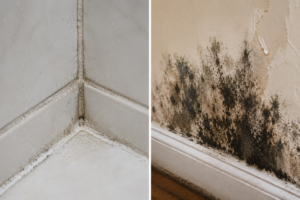
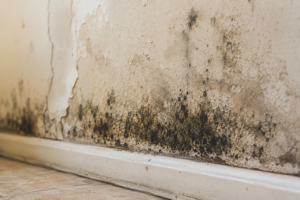



The most reliable signs of hidden mold are a persistent musty smell that doesn’t go away with cleaning, unexplained allergy-like symptoms that improve when you leave the house, visible water stains or bubbling paint/wallpaper, and a past leak or flood that was cleaned up but never professionally dried.
What Does Hidden Mold Smell Like?
A musty, earthy, damp-basement odor is the most common giveaway, it’s caused by microbial volatile organic compounds (MVOCs) that mold releases as it grows. If the smell is strongest in one room or near one wall and doesn’t fade after cleaning and ventilating, that’s a strong sign the source is inside a wall, floor, or ceiling cavity rather than on a visible surface.
What Are the Physical Warning Signs to Look For?
Water stains, discoloration, or a yellow-brown “water ring” on ceilings or walls.
Peeling, bubbling, or cracking paint or wallpaper, which often means moisture is trapped underneath.
Warped, soft, or discolored baseboards, drywall, or flooring.
Condensation that regularly forms on windows, pipes, or in a specific corner of a room.
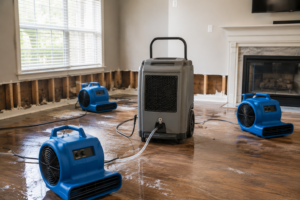
A history of a leak, flood, or roof issue in that area, even if it was cleaned up at the time.
Can Hidden Mold Cause Symptoms Even If You Can’t See It?
Yes. Mold doesn’t need to be visible to affect air quality spores and MVOCs can move through a room even when the growth itself is behind a wall, under flooring, or inside an HVAC system. If symptoms like coughing, congestion, or eye irritation consistently show up at home and ease elsewhere, hidden mold is one of the more common explanations worth ruling out.
Where Does Hidden Mold Most Commonly Grow?
| Location | Why It’s a Common Hiding Spot |
| Behind bathroom walls / under tile | Slow leaks around tubs, showers, and toilets often go unnoticed for weeks |
| Under carpet and padding | Spills, pet accidents, or a slow subfloor leak can soak padding without staining the visible carpet |
| Inside HVAC ductwork | Condensation and dust create ongoing moisture and food source for growth |
| Behind kitchen cabinets | Under-sink leaks are frequently hidden by stored items |
| Attic and roof decking | Roof leaks and poor ventilation trap moisture out of sight |
Should You Test or Just Call a Professional?
DIY mold test kits can confirm mold spores are present in the air, but they generally can’t tell you where the growth is or how extensive it is. That usually requires a physical inspection, sometimes with a moisture meter or thermal imaging to trace dampness through walls and floors without demolition.
Can hidden mold make an entire house smell musty?
Yes, especially if it’s growing inside ductwork, since airflow carries the odor and spores throughout the house rather than keeping them contained to one room.
Is a musty smell always mold?
Not always stagnant air, old carpet, or a dirty HVAC filter can also cause a musty smell. But a musty odor combined with a past leak, visible staining, or symptoms that ease away from home points strongly toward mold.
How do professionals find mold without tearing open walls?
Moisture meters, thermal imaging cameras, and borescopes (small cameras inserted through a small access hole) let technicians trace moisture and locate growth with minimal, targeted openings rather than broad demolition.