
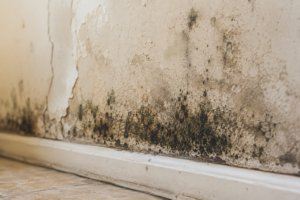

Basement mold is almost always caused by a moisture source that isn’t being managed by groundwater seepage, poor drainage, condensation on cold concrete, or a past flood that wasn’t fully dried. Because basements are naturally cooler, darker, and less ventilated than the rest of the house, they’re one of the most common places for mold to establish and keep coming back.
What Actually Causes Mold in a Basement?
• Groundwater or seepage through foundation cracks, especially after heavy rain or snowmelt common in New England’s freeze-thaw climate.
• Condensation on cold concrete walls and pipes, particularly in summer when warm, humid air meets a cool basement.
• Poor exterior grading or clogged gutters directing water toward the foundation.
• A sump pump failure or a past flood that was cleaned up but not fully dried.
• General high humidity with little to no ventilation or dehumidification running.
Is Basement Mold More Dangerous Than Mold Elsewhere in the House?
Basement mold isn’t inherently more toxic, but it tends to be a bigger problem in practice because it’s out of sight, has an ongoing moisture source rather than a one-time event, and often grows on structural materials, wood framing, insulation, and subfloor that support the rest of the house. Left unaddressed, it can also spread upward through wall cavities and HVAC returns that pull from the basement.
How Can You Tell If Your Basement Has a Mold Problem?
| Sign | What It Usually Means |
| Musty smell that’s strongest near the floor or walls | Active growth, possibly behind finished walls or under flooring |
| White, chalky residue on concrete (efflorescence) | Moisture is moving through the concrete a mold risk factor, though not mold itself |
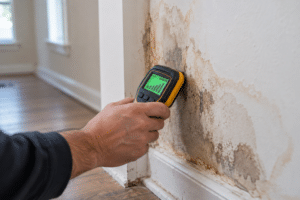
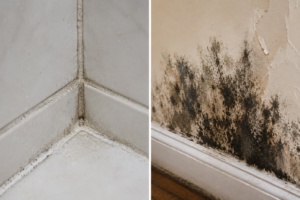
| Visible dark spots on wood framing or drywall | Active mold growth |
| Water stains or a “high-water mark” on walls | Past flooding or seepage that may not have been fully dried |
| Condensation on pipes or the underside of subfloor | Humidity high enough to support mold growth even without a leak |
How Is Basement Mold Removed and Prevented From Coming Back?
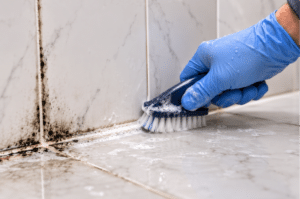
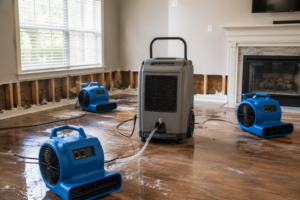
Removal starts with identifying and fixing the moisture source grading, gutters, a sump pump, or a foundation crack because cleaning mold without fixing the cause almost always means it returns. Affected porous materials (drywall, insulation, carpet) generally need to be removed rather than just cleaned, while non-porous surfaces like concrete and framing can often be treated and dried in place. A dehumidifier sized for the space is usually part of the long-term fix, since basements frequently sit above the humidity level mold needs even without an active leak.
Frequently Asked Questions
Can I just paint over basement mold?
No, mold-resistant paint can help prevent new growth on a clean, dry surface, but painting over active mold traps moisture and organic material underneath, which typically makes the problem worse rather than solving it.
What humidity level should a basement stay under to prevent mold?
General guidance from building science and health agencies recommends keeping indoor humidity below roughly 50–60%, which in most basements means running a dehumidifier, especially during humid months.
Does finishing a basement make mold more or less likely?
It can go either way. A finished basement with proper vapor barriers, insulation, and ventilation is often drier than an unfinished one, but a basement finished without addressing an existing moisture problem tends to hide mold growth behind new drywall rather than preventing it.