
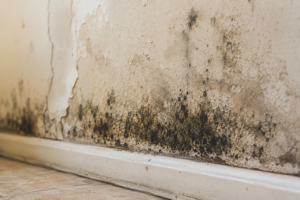

Mildew is a surface-level fungus that stays flat, powdery, and white or grey common on shower tile and windowsills. Mold grows into the material it’s on, often looks fuzzy or slimy, and comes in green, black, orange, or blue. Mildew is usually easy to wipe away; mold generally isn’t, because it has spread beneath the surface.
What Exactly Is the Difference?
Both are fungi that thrive in moisture, but they behave differently. Mildew stays on the surface of a material it doesn’t penetrate. Mold digs into whatever it’s growing on (drywall paper, wood, grout, carpet backing) and draws nutrients from it, which is why mold causes actual damage to the material and mildew mostly doesn’t.
How Can You Tell Them Apart by Sight?
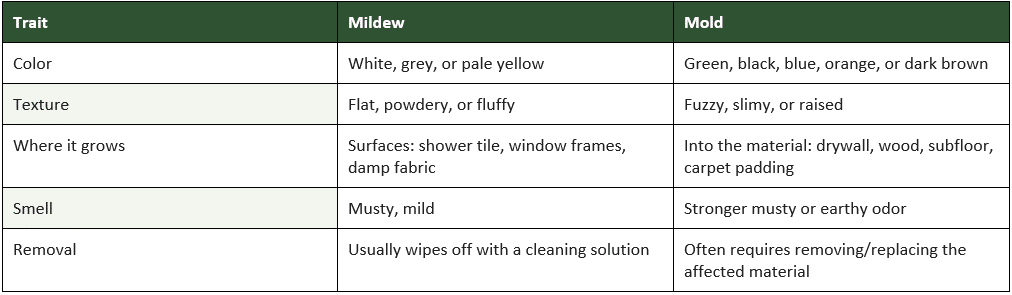
Is Mildew Dangerous Like Mold Can Be?
Mildew is generally less of a health concern than mold because it doesn’t burrow into materials or release spores as heavily, but it can still trigger mild allergy symptoms in sensitive people. If what looks like “mildew” keeps coming back in the same spot after cleaning, or if it’s spreading rather than staying contained, it may actually be early-stage mold rather than mildew.
How Do You Remove Each One Safely?
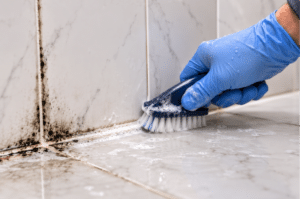
Mildew: clean with a household mildew-cleaning solution or diluted vinegar, dry the surface completely, and improve airflow (exhaust fan, cracked window) so it doesn’t return.
Mold on hard, non-porous surfaces: can sometimes be cleaned by a homeowner with gloves, an N95 mask, and proper ventilation for small areas.
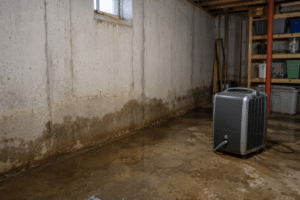
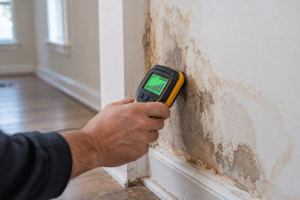
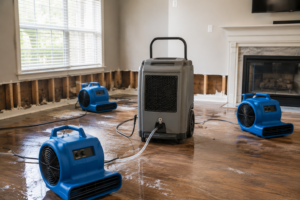
Mold on porous materials drywall, carpet, insulation, wood framing: cleaning the surface doesn’t remove what’s grown into the material; it typically needs to be professionally assessed and, in many cases, removed and replaced.
Can mildew turn into mold?
Mildew and mold are different types of fungi, so mildew doesn’t literally transform into mold. But the same damp conditions that let mildew form are exactly the conditions mold needs, so an untreated mildew spot can become a mold problem over time if moisture isn’t addressed.
Does bleach kill mold and mildew the same way?
Bleach can kill surface mold and mildew on non-porous surfaces like tile, but on porous materials such as drywall or wood, it doesn’t reach mold growing beneath the surface, so the growth often returns.
Why does mildew keep coming back in my bathroom?
Recurring mildew almost always means there’s a consistent moisture source, poor ventilation, a leaking seal, or condensation that isn’t being addressed between cleanings.