
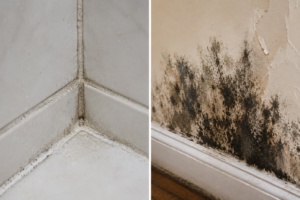
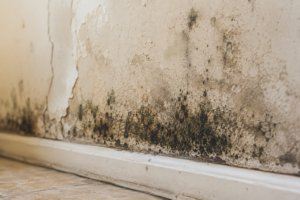

Mold in bathroom grout is caused by the combination nearly every bathroom has: constant moisture, warmth, and organic residue (soap film, skin cells) for mold to feed on. Light surface mold can often be treated with a grout-safe cleaner and better ventilation, but grout that stays dark after repeated cleaning usually means the mold has worked into the porous grout itself and needs deeper treatment or regrouting.
Why Does Mold Keep Coming Back in Shower Grout Specifically?
Grout is porous, which means mold doesn’t just sit on the surface the way it might on tile or glass it can grow into the material. Combined with a bathroom’s humidity and limited airflow, this makes grout lines one of the most persistent spots for recurring mold, even in bathrooms that are cleaned regularly.
How Do You Remove Mold From Grout Safely?
1. Ventilate first: run the bathroom fan or open a window, and wear gloves; a mask is a good idea for larger areas or if you’re sensitive to mold.
2. Apply a grout-safe cleaning solution (a diluted bleach solution or a dedicated mold/mildew grout cleaner) and let it sit per the product’s instructions don’t scrub it in immediately.
3. Scrub with a stiff-bristled grout brush, working in small sections.
4. Rinse thoroughly and dry the area completely a squeegee or towel after every shower helps prevent regrowth.
5. If discoloration remains after cleaning, the mold has likely penetrated the grout, which cleaning alone won’t fully resolve.
When Does Grout Need to Be Resealed or Replaced Instead of Cleaned?
| Situation | Recommended Approach |
| Light surface discoloration, comes off with cleaning | Clean and reseal grout to slow future staining |
| Grout stays dark/black after repeated cleaning | Regrouting is usually needed the mold has penetrated the material |
| Mold around the caulk line at the tub or shower base | Caulk generally can’t be cleaned effectively; it should be removed and re-caulked with a mold-resistant sealant |
| Mold spreading beyond the shower onto surrounding wall tile | Worth a professional look may indicate a leak behind the tile, not just surface humidity |
How Do You Prevent It From Coming Back?
• Run the bathroom exhaust fan during and for 20–30 minutes after every shower.
• Squeegee tile walls and glass after each use to cut down on standing moisture.
• Reseal grout every 12–18 months, since sealant wears down and loses its water resistance over time.
• Wash shower curtains/liners or bath mats regularly they trap moisture against the wall or floor.
Is mold in shower grout dangerous?
For most people it causes mild irritation at most, but people with asthma, allergies, or mold sensitivity can react more noticeably, especially in a small, poorly ventilated bathroom where spore concentration is higher.
Does vinegar work as well as bleach on grout mold?
Vinegar can be effective on light surface mold and is gentler on grout over repeated use, but bleach is generally more effective on deeper or more established staining though it doesn’t reach mold that has penetrated deep into porous grout.
Why does mold come back within days even after I clean it?
If it returns quickly, the moisture source (poor ventilation, no post-shower drying routine, or a hidden leak) hasn’t actually been addressed cleaning removes the visible mold but not the conditions that let it grow back.