
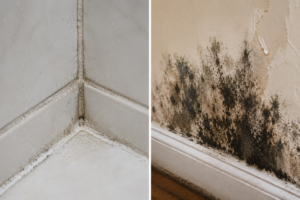

“Black mold” usually refers to Stachybotrys chartarum, a dark greenish-black mold that grows on materials that have stayed wet for days, such as drywall, carpet padding, or wood framing after a leak. It can trigger allergy-like symptoms and respiratory irritation in sensitive people, but not every dark-colored mold you see is this specific species. Lab testing is the only way to confirm it.
Is Black Mold Actually More Dangerous Than Other Molds?
Not necessarily. Most common indoor molds, including black-colored ones, can cause similar irritant and allergic reactions coughing, sneezing, itchy eyes, skin irritation in people who are sensitive or have asthma. The danger with any mold, black or otherwise, scales with how much is growing and how long you’ve been exposed to it, not just its color.
The reputation “black mold” has for being uniquely toxic comes largely from media coverage in the early 2000s. Public health guidance since then has focused less on identifying the exact species and more on a simple rule: if you can see or smell mold, it should be removed, regardless of its color.
What Does Black Mold Look Like?
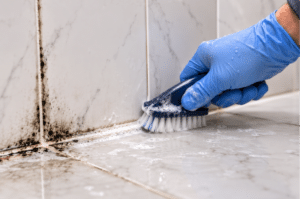
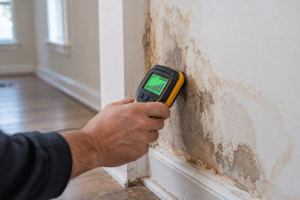
It typically appears as dark green-to-black patches with a slightly slimy or fuzzy texture when the surface is still damp, and a powdery, flaking texture once it dries out. It’s most often found in places that stayed wet for an extended period: behind baseboards after a flood, inside cabinet walls under a leaking sink, or on drywall behind a hidden pipe leak.
What Are the Symptoms of Mold Exposure?
Common symptoms include a persistent cough, nasal congestion, itchy or watery eyes, throat irritation, and skin rashes. People with asthma, allergies, or compromised immune systems tend to react more strongly and more quickly than others in the same room.
Symptoms that improve when you leave the house and return when you’re back are a strong sign the exposure is happening indoors.
Symptoms that started shortly after a leak, flood, or long humid stretch point toward moisture-related mold.
Persistent symptoms with no clear seasonal allergy pattern are worth mentioning to a doctor, especially if you’ve had recent water damage.
Black Mold vs. Regular Mold: How They’re Actually Different
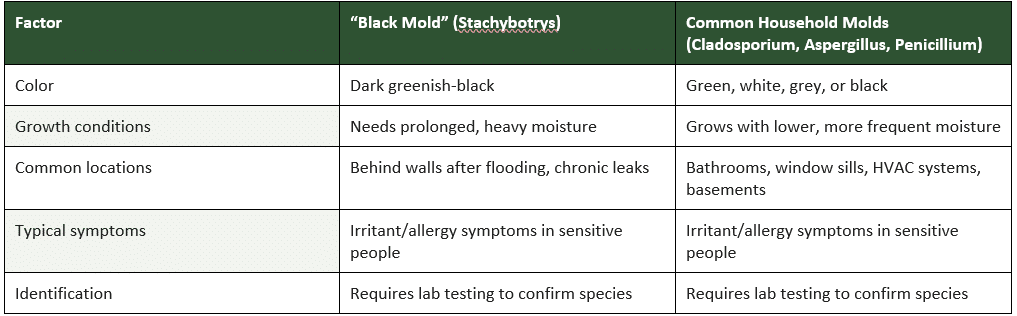
What Should You Do If You Find It?
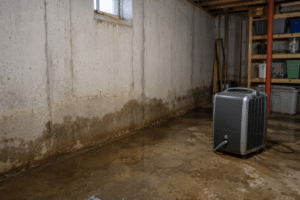
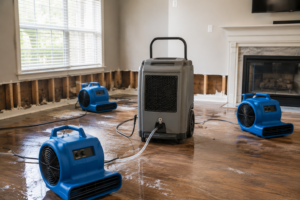
Treat any visible mold growth the same way: stop the moisture source first, then remove the mold. Small areas (roughly under 10 square feet, per general EPA guidance) can sometimes be handled with basic precautions gloves, an N95 mask, and ventilation. Larger areas, mold behind walls or in HVAC ductwork, or mold following a flood or major leak generally call for a professional assessment, because the growth is often more extensive than what’s visible on the surface.
Can black mold make you sick long-term?
For most healthy people, symptoms resolve once the mold is removed and the space is dry. People with asthma, allergies, or lung conditions may have more persistent or severe reactions and should consult a doctor if symptoms continue.
Do I need to test to confirm it’s black mold?
Visually, you can’t reliably tell one mold species from another. Lab testing is the only way to confirm Stachybotrys specifically, but from a removal standpoint, the safe response is the same regardless of species.
How fast does black mold spread?
Under the right conditions sustained moisture and organic material like drywall paper or wood mold colonies can visibly expand within days, which is why fast drying after any leak matters more than the color of what’s already growing.