

Why Smoke Smell Is So Difficult to Remove
Smoke from a fire isn’t just unburned air, it’s a complex mixture of gases, liquid droplets, and fine particles that carry combustion byproducts from whatever burned: wood, plastic, fabric, insulation, food, and more.
Smoke penetrates everything. During a fire, smoke under pressure forces itself into every porous material in your home. Drywall, wood framing, insulation, carpet padding, upholstery foam, and even the inside of walls absorb smoke compounds. A light surface wipe-down cannot reach these deposits.
Smoke residue is chemically complex. The soot and residue from smoke contain acids, tars, and volatile organic compounds (VOCs) that bond to surfaces. These compounds off-gas over time which is why the smell can seem to come back even after initial cleaning.
Porous materials act as slow-release reservoirs. Items like mattresses, upholstered furniture, clothing, carpets, and wood paneling hold smoke compounds and release them slowly into the air. The smell that seems to fade and then return is often these materials off-gassing.
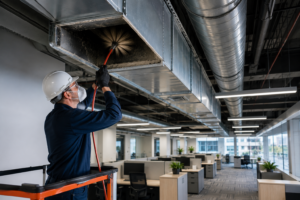
HVAC systems spread contamination. If the HVAC system was running during or after the fire, smoke particles circulate through the duct system and deposit on duct walls, filters, the air handler, and coils. Every time the system runs, it reintroduces smoke into the air throughout the home.
Immediate Steps After a Fire
Once it’s safe to enter your home after a fire (confirmed by fire officials), these early actions help limit the spread of odor and soot:
1. Ventilate the space immediately.
Open all windows and doors that weren’t affected by fire. Place fans in windows to push smoky air out of the home. The sooner you exchange inside air with fresh outside air, the less additional absorption into surfaces occurs.
2. Do not run the HVAC system.
If the HVAC was running during the fire, the ductwork is likely contaminated. Running the system will continue to circulate smoke particles and deposit soot throughout the home. Leave it off until the ducts are professionally inspected and cleaned.
3. Remove obvious soot-covered items carefully.
Soot is fine and easily disturbed wiping it aggressively and smearing it deeper into surfaces rather than removing it. Pick up heavily soiled items without rubbing or dragging them.
4. Do not use scented candles, air fresheners, or masking sprays.
These products layer fragrance over smoke odor without addressing the source. They may make the smell temporarily less noticeable but don’t remove it and they add additional chemical complexity that professional restoration must work around.
5. Document everything for insurance.
Photograph every affected room, every damaged item, every area of soot or water damage (from firefighting) before touching anything. This documentation is critical for your insurance claim.
Why DIY Smoke Odor Removal Usually Falls Short
Homeowners try many approaches on their own activated charcoal bags, ozone generators, vinegar, baking soda, and repainting. Some provide temporary improvement. None fully solve a genuine smoke odor problem.
Activated charcoal and baking soda absorb some airborne odor molecules, but they can’t reach compounds embedded in walls, insulation, or structural materials. They’re useful for mild smoke exposure in a contained area, not for post-fire cleanup.
Consumer ozone generators produce ozone that reacts with and neutralizes odor compounds. This can be effective at the surface level but doesn’t penetrate walls or porous materials deeply enough to address embedded smoke. Professional ozone treatment at the concentrations needed to address serious smoke damage requires equipment that isn’t available to consumers and must be conducted in an unoccupied space.
Repainting is one of the most common mistakes after fire damage. If walls are repainted without proper sealing and deodorization first, smoke compounds in the drywall will bleed through the paint over time and the smell returns. Proper sealing with an odor-blocking primer after cleaning is required before repainting.
Cleaning surfaces without treating the source addresses what you can see but not what’s inside walls, insulation, and porous materials. The smell returns because the source material hasn’t been treated.
What Actually Works: Professional Fire Restoration Approach
Effective smoke odor removal is a multi-step professional process. It’s not a single product or a single treatment it requires a systematic approach that addresses all contaminated materials and spaces.
Step 1: Structural Assessment
A restoration technician assesses the full scope of contamination not just visible soot but the extent of smoke penetration into walls, ceilings, and structural components. This assessment determines what can be cleaned vs. what must be removed and replaced.
Step 2: Contents Removal
Heavily contaminated contents, furniture, clothing, bedding, personal items are inventoried, packed out, and cleaned off-site at a restoration facility where they can receive focused treatment. Items that are salvageable are cleaned; items that are not are documented for insurance.
Our pack-out services handle this process with care and full documentation.
Step 3: HEPA Vacuuming and Dry Soot Removal
Before any wet cleaning, loose soot is carefully removed using HEPA-filter vacuum equipment. This step is done before wet cleaning because wetting soot before dry-removing it turns it into a smear that sets deeper into surfaces. Dry soot removal is a slow, careful process done with proper equipment and technique.
Step 4: Chemical Sponge Cleaning
Specialized dry chemical sponges designed for soot removal are used on walls, ceilings, and other surfaces. These sponges lift soot from painted surfaces without rubbing it in, and are an important step before wet cleaning.
Step 5: Surface Washing and Deodorization
Professional-grade cleaning agents are applied to structural surfaces, walls, ceilings, cabinets, floors, and trim to remove residual smoke compounds. Deodorizing agents that neutralize odor molecules (not just mask them) are applied as part of this process.
Step 6: Thermal Fogging or Hydroxyl Treatment
These are the professional methods that reach where surface cleaning cannot:
Thermal fogging uses a machine that heats a deodorizing solution into a fog of droplets so fine they penetrate porous surfaces, wall cavities, and ductwork reaching the smoke compounds embedded there and neutralizing them on contact.
Hydroxyl generation uses UV light to produce hydroxyl radicals, the same oxidizing process that occurs in the atmosphere which react with and destroy odor molecules throughout the structure. Hydroxyl treatment can be conducted in an occupied space (unlike ozone) and is often used for ongoing treatment during restoration.
Step 7: HVAC Cleaning
The entire HVAC system ducts, air handler, coils, and all registers are professionally cleaned to remove smoke deposits. If the system ran during or after the fire, this step is not optional; a contaminated HVAC will continue reintroducing smoke odor indefinitely.
Step 8: Final Inspection and Air Quality Testing
After all treatments are complete, the home is inspected and air quality may be tested to confirm smoke compounds are below detectable levels. Final deodorization is applied as needed.
Know more about our fire damage restoration services
What About Water Damage After a Fire?
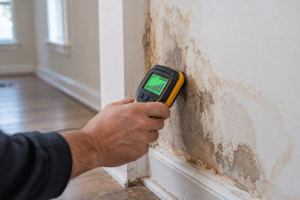
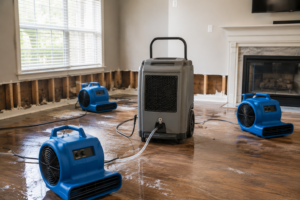
In virtually every structure fire, firefighting efforts introduce significant water damage. This water damage must also be addressed and must be addressed quickly, because wet structural materials after a fire are at elevated risk of mold growth within 24–48 hours.
Fire restoration and water restoration are often performed simultaneously by the same restoration team. If your home has experienced fire damage, water damage assessment is part of the initial evaluation.
Learn about our water damage restoration services
Does Homeowner’s Insurance Cover Smoke Odor Removal?
Yes, in most cases. Standard homeowner’s insurance policies cover fire damage restoration, including smoke odor removal, as part of the covered loss. The scope of coverage depends on your specific policy, deductible, and coverage limits.
Key steps for your insurance claim:
- Document everything: before touching or cleaning anything.
- File your claim promptly: most policies require timely notification.
- Working with your insurer on scope your restoration company can provide a detailed damage scope that helps your adjuster understand what’s needed.
- Don’t sign off on a settlement until all smoke odor treatment is complete and confirmed effective odor problems sometimes aren’t fully apparent until the restoration process reveals the extent of penetration.
A good restoration company documents the scope of damage thoroughly and can communicate directly with your adjuster, which streamlines the claims process.
Frequently Asked Questions
How long does it take to get rid of the smoke smell after a fire?
It depends entirely on the extent of the fire and how much smoke penetrated the structure. A contained kitchen fire with minimal smoke spread may be resolved in 1–3 days of professional treatment. A larger fire with significant smoke damage throughout the home may take 1–3 weeks or longer, depending on what materials need to be removed and replaced.
Can I live in my home during smoke odor restoration?
In most cases involving significant smoke damage, it’s recommended to relocate during restoration. Thermal fogging and some chemical treatments require the home to be unoccupied during application. Your restoration company will advise on this based on the specific treatment plan.
Will the smoke smell eventually go away on its own?
No. Smoke compounds embedded in structural materials don’t dissipate on their own they off-gas gradually over time but the process takes years and leaves your home smelling of smoke throughout. Professional treatment is necessary to resolve the problem in a reasonable timeframe.
My smoke detector went off from cooking but there was no actual fire. Do I have smoke damage?
Cooking smoke and very minor incidents typically don’t cause structural smoke damage. Smoke from a true fire, especially one that involves burning building materials, is a different chemical situation. If there was actual fire damage even from a small fire, professional assessment is recommended.
Can smoke odor get into my home from a neighbor’s fire?
Yes, especially in multi-family housing. If smoke from a neighboring unit or building enters your home for an extended period, professional assessment and treatment may be needed depending on exposure duration and concentration.
Smoke odor after a fire is not a problem that resolves itself or responds to surface cleaning alone. The compounds that cause the smell have penetrated into the structure of your home, and addressing them requires professional assessment, systematic treatment, and the right equipment. If your Vermont or New Hampshire home has experienced fire damage large or small our team at Top Cleaning & Restoration can assess the situation, handle the full restoration process, and work directly with your insurance company to get your home back to normal.
We’re available 24/7 for fire and water damage emergencies.